Home/Car care guides/Dashboard warning lights
Guide · Warning lights
Dashboard Warning Lights and What They Mean
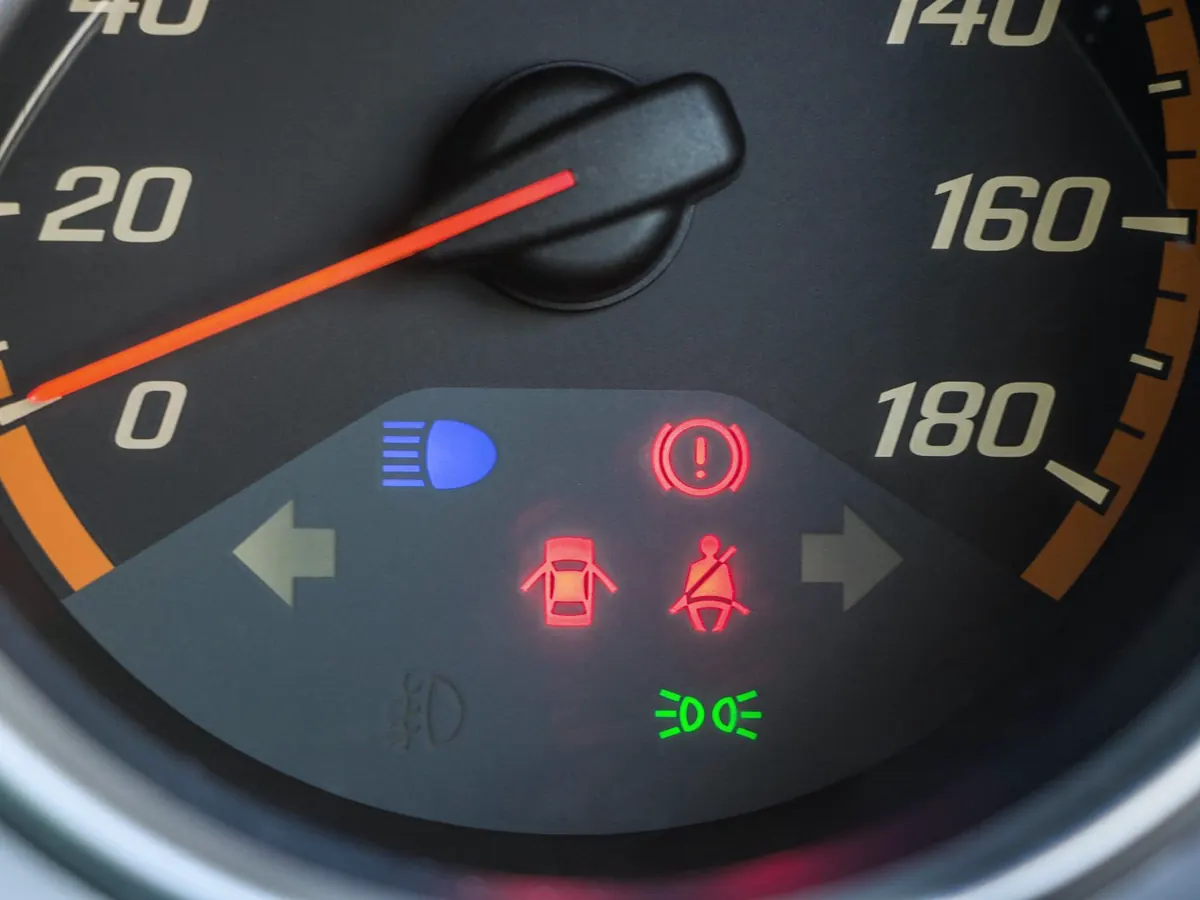
Dashboard warning lights are the car telling you something has changed. The colour is the first clue: red usually means stop where it is safe, amber means book a check soon and green or blue simply shows a system is on. This guide covers the common lights, what they usually mean and what to do next.
Computer diagnosis from AED 140. The price is confirmed before any testing starts.
Red or amber?
Which warning light means stop now?
Use the colour and the way the car feels together. If you are unsure, treat the light as the more urgent kind.
Red light: stop where it is safe
Pull over when you safely can and switch off. Driving on can turn a small fault into serious damage.
- Oil pressure light
- Engine temperature light or gauge in the red
- Brake system light with the parking brake released
- Battery or charging light while driving
- Any light that comes with smoke, a burning smell or loud noise
Amber light: book a check soon
The car is usually drivable with care, but the fault should be found before it grows.
- Steady check engine light
- ABS or traction control light
- Tyre pressure light
- Glow plug light flashing on a diesel
- Service reminder
Red lights
Red warning lights and what to do
These lights point to a problem that can damage the car or affect safety. Stop where it is safe before you do anything else.
Red · stop
Oil pressure
The engine is not getting enough oil pressure. Stop and switch off. Check the oil level once the engine has cooled; if the level is fine or the light stays on, do not restart the engine.
Red · stop
Engine temperature
The engine is running too hot, often in summer traffic with the AC working hard. Stop and switch off. Never open the coolant cap while the engine is hot.
Red · stop
Brake system
Check the parking brake first. If it is released and the light stays on, the brake fluid may be low or the system has a fault. Do not keep driving.
Red · stop
Battery or charging
The car is no longer charging and is running on battery power alone. Switch off what you do not need and stop before the battery runs flat.
Red on many cars
Airbag
The airbag system has found a fault and may not work in a crash. The car can usually be driven, but book a check promptly.
Amber lights
Amber warning lights to check soon
An amber light rarely means stop at once, but it does mean a system needs attention. Book a check and drive gently until then.
Amber · check soon
Check engine
The engine computer has stored a fault. Steady means book a check; flashing usually means a misfire, so reduce speed and stop driving as soon as it is safe.
Amber · check soon
ABS
The anti-lock system has a fault. Normal braking usually still works, but the wheels may lock under hard braking. Leave more distance until it is checked.
Amber · check soon
Tyre pressure
One or more tyres is below the set pressure. Check all four, including for a slow puncture. Hot roads change pressures, so check when the tyres are cool.
Amber · check soon
Traction or stability control
A brief flash on a slippery surface is normal. If it stays on, the system may be off or faulty and will not help you in a skid.
Amber · diesel only
Glow plug
On a diesel it lights before starting and should go out. If it flashes or stays on while driving, the engine has a fault that needs reading.
Amber · reminder
Service due
Not a fault: the car is reminding you that a service is due by date or mileage. Book it before the next long drive.
Green and blue lights
Lights that only give information
Green and blue lights confirm that something is switched on. They are not faults, but a light that will not go off can still point to a problem.
Green: a system is on
- Dipped headlights
Your main lights are on. If a bulb warning appears, a lamp has failed - Turn indicators
Flashing faster than usual often means a bulb is out - Cruise control
Shown when cruise is ready or set - Ready or eco mode
On hybrids and electric cars, ready means the car can move
Blue and other information lights
- High beam
Main beam is on. Dip it for oncoming traffic - Front or rear fog lights
Turn them off once visibility improves, for example after a dust storm - Driver assistance symbols
Lane or distance systems are active. Not sure? Check the owner's manual - Gauge or screen faults
If gauges stop working or the screen flickers
When a light comes on
What to do in the first few minutes
General safety advice for any warning light. Your owner's manual gives the exact meaning for your car.
Note the colour and whether it flashes
Red or flashing lights come first. A steady amber light usually gives you time to book a check.
Notice how the car feels
Loss of power, shaking, a soft brake pedal, smoke or a smell all make the problem more urgent.
Stop where it is safe
For a red light, move off the road when you can, switch off and use your hazard lights. On a busy road, wait for a safe exit.
Take a photo
A clear photo of the dashboard helps us tell which light it is and what to check first.
Do not just clear it
Clearing a code turns the light off but does not fix the cause. It usually comes back.
Every make is different
Not sure which light you are seeing?
Symbols, colours and the way lights behave differ between makes and even between models of the same make. A light that is amber on one car may be red on another, and newer cars often show a text message as well as the symbol.
Your owner's manual has the full list for your car. If you still are not sure, send us a photo of the dashboard and we will tell you whether to stop or book a check.
Send us
- A photo of the dashboard with the light on
- Make, model and year
- Whether the light is steady or flashing
- How the car is driving
If the light is red, stop the car safely before you send anything.
Warning lights
Dashboard warning light questions
General answers. The owner's manual is the final word for your car.
Can I drive with the check engine light on?
If the light is steady and the car drives normally, you can usually drive gently to a booked check. If it flashes, or the car shakes or loses power, stop as soon as it is safe.
What is the difference between a red and an amber warning light?
Red usually means a problem that can cause damage or affect safety, so stop where it is safe. Amber means a system needs attention soon but is not normally an emergency.
Why did a warning light come on and then go off?
The fault may come and go, such as a loose connection or a sensor reacting to heat. The car often stores a code even after the light goes out, so a scan can still find it.
Why are several warning lights on at once?
A weak battery or a charging fault can make many systems report errors together. Testing the battery and charging system is often the first check.
Will clearing the code fix the warning light?
No. Clearing a code only turns the light off. If the cause is still there, the light comes back, and the fault may get worse in the meantime.
Do warning light symbols mean the same on every car?
The common ones are similar, but symbols, colours and messages differ by make and model. Check your owner's manual or send us a photo.
Warning lights · Dubai
A light came on?
Find out why.
Call or WhatsApp with a photo of the dashboard and your car model. We will tell you whether to stop or book a check, and confirm any diagnostic charge before testing.